Bergbaustadt Bergkamen
Haus Aden
Erleben Sie den Alltag von über 4.000 Bergleuten in einem der modernsten Tiefbaustandorte des Ruhrgebiets – mit Fördertürmen, Grubenluft und großem Zusammenhalt.
.jpg&w=3840&q=75)
Erleben Sie den Alltag von über 4.000 Bergleuten in einem der modernsten Tiefbaustandorte des Ruhrgebiets – mit Fördertürmen, Grubenluft und großem Zusammenhalt.
Die Zeche Haus Aden entstand ab den 1940er-Jahren im nördlichen Ruhrgebiet. Sie galt als Symbol für den modernen Tiefbergbau. In ihrer Hochphase arbeiteten hier über 4.000 Menschen. Ihr Alltag war geprägt von harter körperlicher Arbeit, engen Arbeitsbeziehungen und starkem gewerkschaftlichem Engagement.
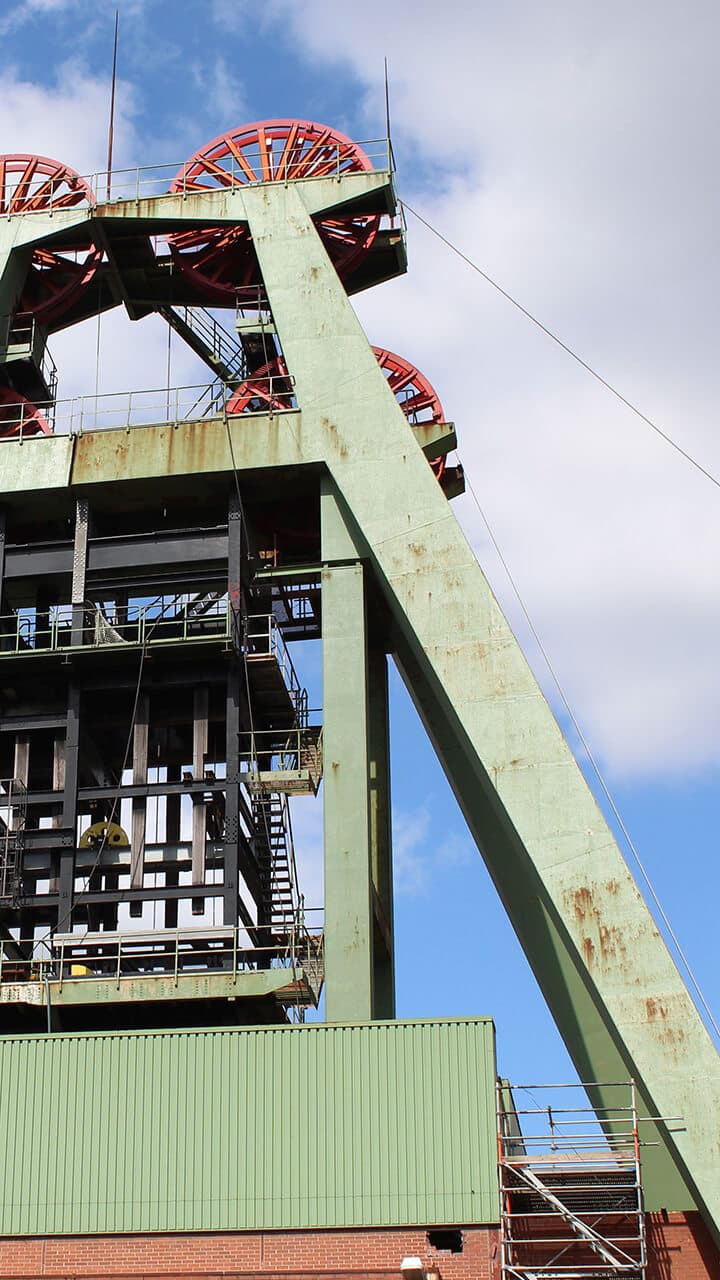
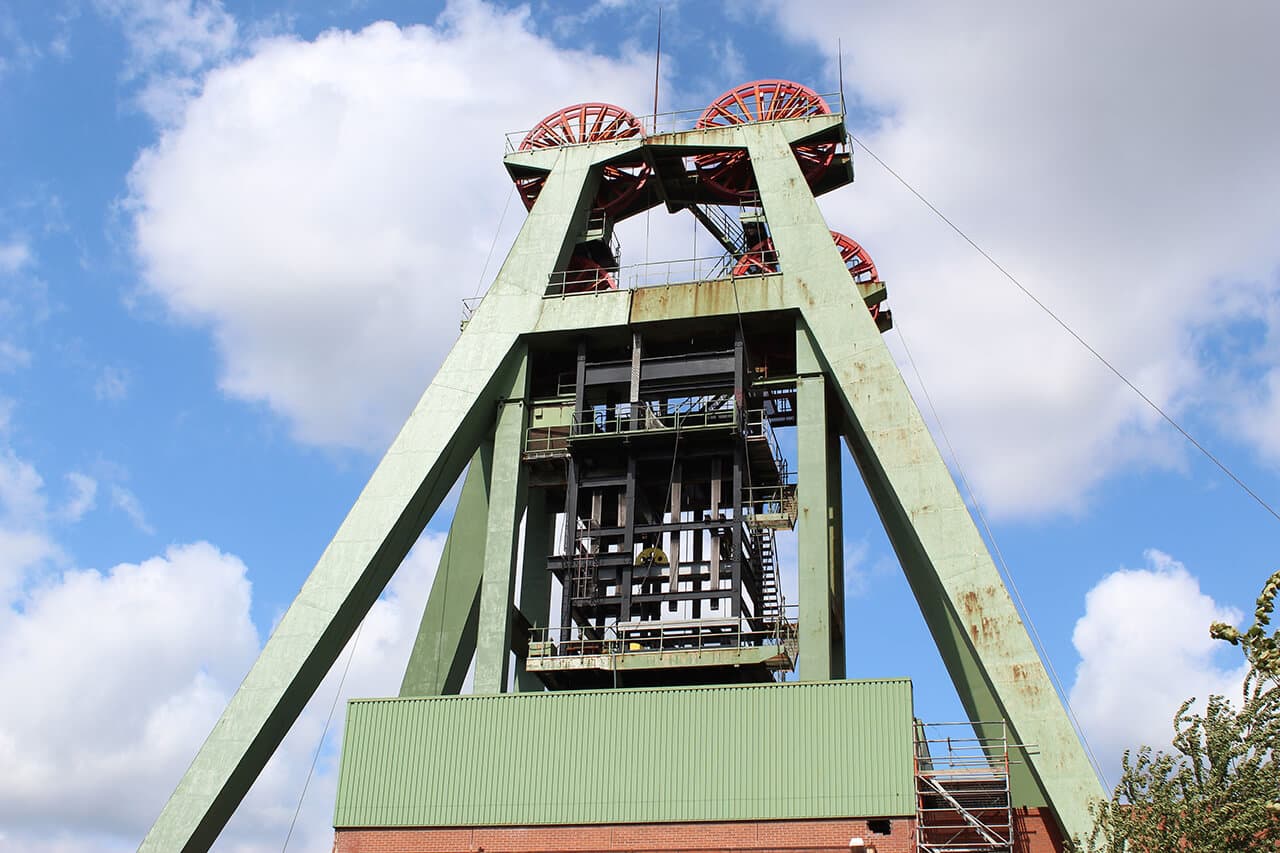
Der Zugang zur unterirdischen Arbeitswelt führte über mehrere Schächte, darunter Schacht 1 und 2 mit einem großen Doppelbock-Förderturm. Die Förderanlage über Tage, die „Köppe“, transportierte sowohl Kohle als auch die Bergleute. Das Fördergestell, der „Löbbe“, brachte sie in Etappen bis zu 1.300 Meter in die Tiefe. Dort begann die Schicht – unter extremen Bedingungen.
In diesen Tiefen war frische Luft überlebenswichtig. Über Schacht 5 wurde ein Belüftungssystem betrieben, das saubere Luft in die Grube leitete und schädliche Gase abführte. Große Ventilatoren und eine gezielte Steuerung des Luftstroms sorgten für die notwendige Sicherheit. Unter Tage erstreckte sich ein weit verzweigtes Netz aus Strecken, Abbauräumen und Querschlägen – die sogenannten Grubenfelder. Sie wurden mit moderner Technik kartiert und regelmäßig gesichert. Der Abbau erfolgte im Strebbau. Maschinen, Schildausbau, Förderbänder und Rutschen unterstützten die Arbeit.
Der Tag begann oft um vier Uhr morgens. Nach dem Umziehen in der Kaue folgte die Einfahrt in die Grube. Hitze, Staub und Lärm bestimmten die folgenden acht Stunden. Die Arbeit verlangte höchste Konzentration. Jeder war auf den anderen angewiesen: der Hauer, der das Kohleflöz löste, der Steiger, der für Sicherheit sorgte, und der Fördermaschinist, der über Tage die Seile lenkte. Trotz aller Belastung war der Zusammenhalt groß. Kollegialität war überlebenswichtig, denn Unfälle und gesundheitliche Schäden waren häufig.
Schon früh engagierten sich viele Beschäftigte gewerkschaftlich. Die IG Bergbau, Chemie, Energie wurde zur zentralen Vertretung. Löhne, Arbeitsschutz, Mitbestimmung und Frühverrentung waren wichtige Themen. Haus Aden galt als Standort mit starker gewerkschaftlicher Präsenz – auch in den Jahren der Kohlekrise ab 1960.
Nach Stilllegung der Zeche entstand auf dem Gelände die Wasserstadt Aden. 2021 wurde das Fördergerüst von Schacht 2 abgebaut.
Die Zeche „Haus Aden“ entstand in den 1930er Jahren am östlichen Rand des Ruhrgebiets. Ziel war es, neue Kohlevorkommen in tieferen Gesteinsschichten zu erschließen. Dafür wurden zwei Schächte abgeteuft und ein modernes Fördergerüst errichtet. Der Aufbau der Anlage folgte einem klaren Plan: Schachtanlagen, Waschkaue, Fördermaschinenhaus und Kokerei lagen in funktionaler Nähe zueinander. Wohnsiedlungen für die Bergleute entstanden in unmittelbarer Umgebung. Mit der Zeit wurde die Anlage technisch erweitert und an neue Anforderungen angepasst. In den 1970er Jahren fusionierte „Haus Aden“ mit der benachbarten Zeche „Grimberg“. Der Standort entwickelte sich zu einem wichtigen Förderbetrieb mit tausenden Beschäftigten.
Der Tag begann in der Waschkaue, wo sich die Bergleute umzogen und ihre Kleidung an Haken unter die Decke zogen. Mit dem Förderkorb fuhren sie in die Tiefe, oft mehrere hundert Meter unter die Erde. Dort herrschten Dunkelheit, Hitze und Lärm. Die Arbeit in den engen Stollen war gefährlich und verlangte große Aufmerksamkeit. Maschinen, Sprengstoff und Förderbänder bestimmten den Ablauf. Jeder musste sich auf den anderen verlassen können. Gemeinschaft und Vertrauen waren wichtig. Der Alltag unter Tage prägte die Menschen und schuf ein starkes Gefühl der Zusammengehörigkeit.
Hier ist in der Rekonstruktion der Baubestand im Jahre 1983 zu sehen.
Der Klang der Seilscheiben des Förderturm begleitete die Bergleute täglich.