Römerpark Bergkamen
Roman oven
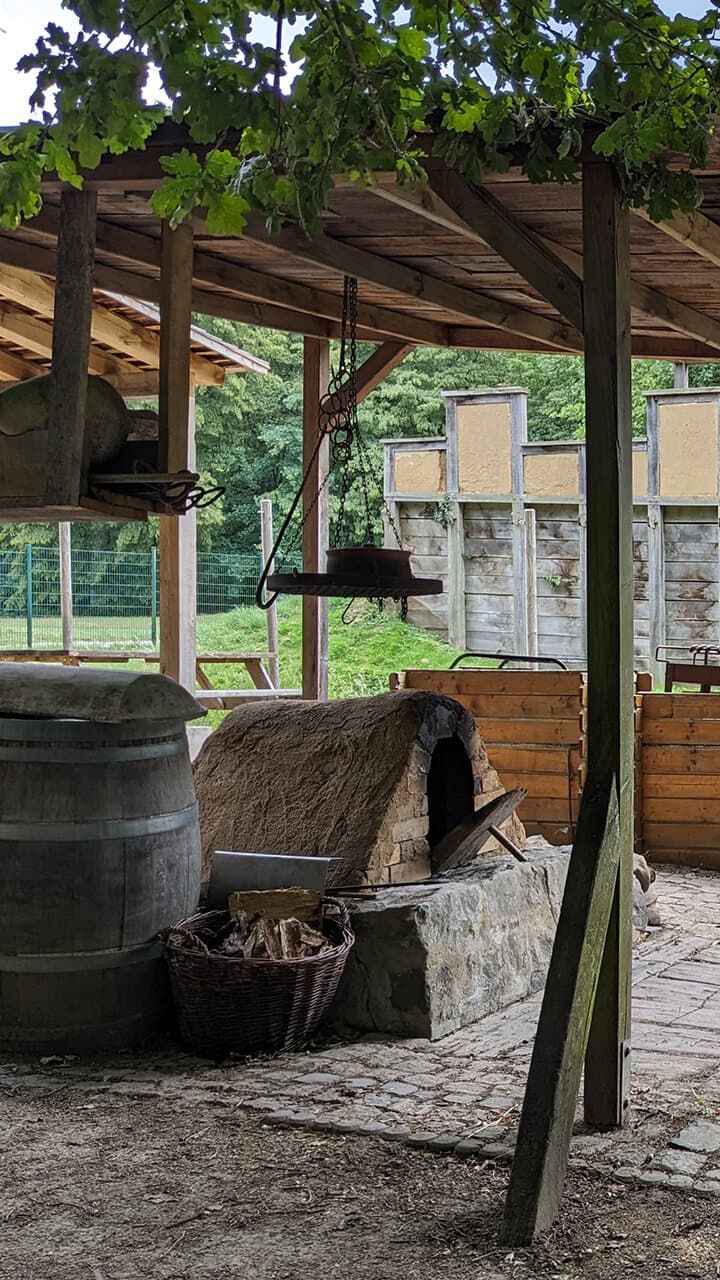
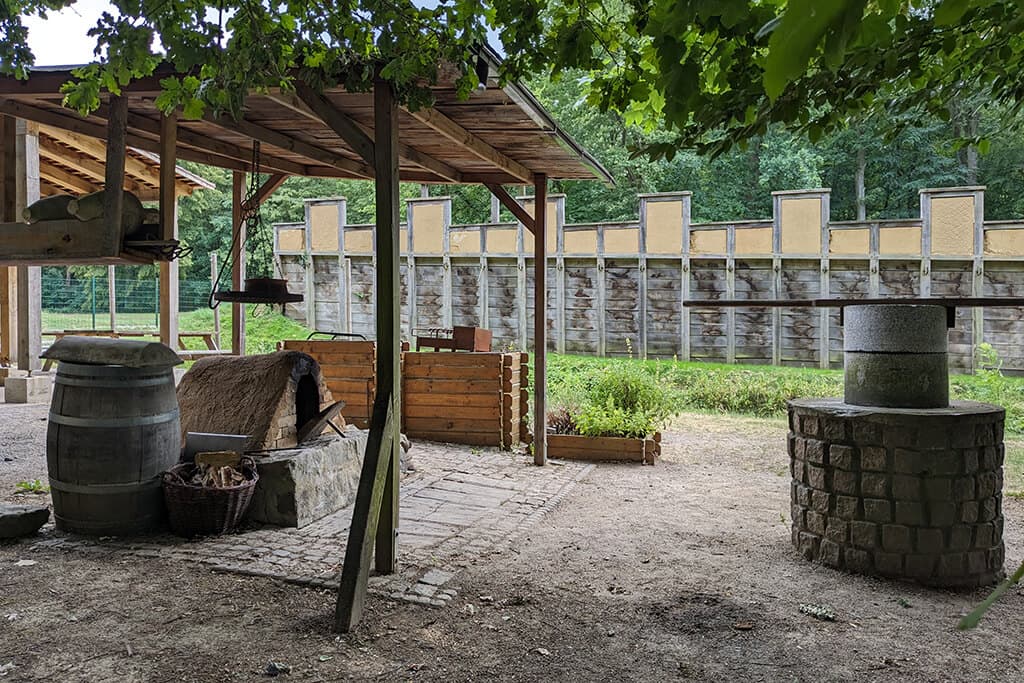
Die römischen Soldaten lebten in Zeltgemeinschaften zusammen. Zu jedem Contubernium gehörte auch eine Getreidemühle sowie ein Lehmkuppelofen.
.jpg&w=3840&q=75)
Die römischen Soldaten lebten in Zeltgemeinschaften zusammen. Zu jedem Contubernium gehörte auch eine Getreidemühle sowie ein Lehmkuppelofen.
Die Versorgung der Truppen stellte die Römer vor eine logistische Herausforderung, die sie hervorragend lösten. Der Nachschub wurde auf dem Wasserweg, auf flachbodigen Booten (Prahme) organisiert. Transportiert wurden vor allem Gewürze und Korn als Grundnahrungsmittel. Des Weiteren brachten die Schiffe Fässer mit saurem Wein sowie Weinessig. Die Römer verdünnten ihr Trinkwasser mit Wein (Lora) oder Weinessig (Posca). Die Bakterien im Wasser wurden dabei abgetötet.
Die Mahlzeiten wurden von den Soldaten selbst gekocht. Diese Aufgabe übernahm jede Zeltgemeinschaft (Contubernium) für sich. Ein Contubernium bestand aus acht Legionären. Diese kleine Gemeinschaft wohnte zusammen in einer Holzbaracke und teilte sich auf dem Marsch ein Zelt. Gemeinsam erledigte man alle anstehenden Aufgaben. Zudem hatte jedes Contubernium eine eigene Kochstelle sowie eine Getreidemühle. Das Korn wurde gemeinsam gemahlen. Das Brot wurde an einer zentralen Stelle im Lager vom Bäcker in einem Lehmofen gebacken.
Gegessen wurde neben Brot vor allem ein Brei aus Gerste und Weizen (Puls). Dieser wurde mit unterschiedlichen Gemüsesorten, wie beispielsweise Karotten oder Lauch, verfeinert. Als Gewürze verwendete man am liebsten Pfeffer, Koriander und Kümmel. Je nach Jahreszeit gab es unterschiedliche Obstsorten sowie Nüsse und Hülsenfrüchte. Fleisch wurde nur sehr selten gegessen.